How to File a Commercial Roof Insurance Claim Without Losing Your Mind
No one has ever been excited to deal with an insurance adjuster. If your commercial property just took a beating from one of those fierce summer storms rolling across Illinois, you’ve probably got a lot on your plate. Between chasing down leaks, handling tenant issues, and keeping daily operations running smoothly, the last thing you want to do is dive headfirst into a stack of insurance paperwork.
Peak storm season might be winding down, but the insurance company doesn’t take a vacation. The good news? Filing a commercial roof claim doesn’t have to be a hassle! Having the right game plan and a trusted roofing partner in your corner can turn a stressful ordeal into a smooth, straightforward process. In this blog, we’ll talk about how to get your roof repaired and get your insurance carrier on board without losing your mind in the process.
Step 1: Document Everything (Before Anything Else Happens)
Insurance companies love paperwork, and the golden rule of any property claim is if it isn’t documented, it didn’t happen. As soon as it’s safe to survey the property after a storm, start gathering evidence:
- Interior Evidence First: Walk the building and snap clear photos of any stained ceiling tiles, pooling water, or active leaks. Note the exact date and time you first noticed them and take photos with a time-stamp for your records.
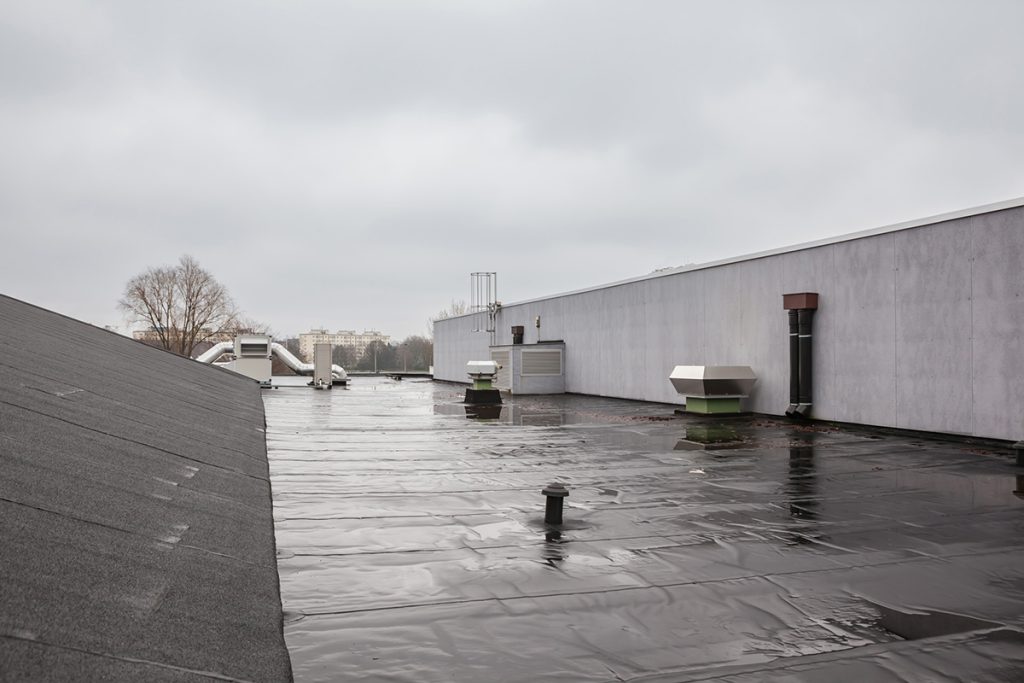
- Exterior & Roof Level: If you have safe roof access, document dented flashing, torn membranes, displaced gravel, punctures from flying debris, or any other visible damage to the roof or roof deck.
- Keep a Paper Trail: Save all emails, work orders, and emergency mitigation receipts (like temporary tarping). Your insurance provider will want to see that you took immediate steps to prevent further damage.
Step 2: Bring In Your Contractor Before the Adjuster
One of the biggest mistakes commercial property managers make is calling the insurance company before getting an independent professional assessment. Insurance adjusters are professionals, but they don’t work for you, they represent the insurance company’s bottom line.
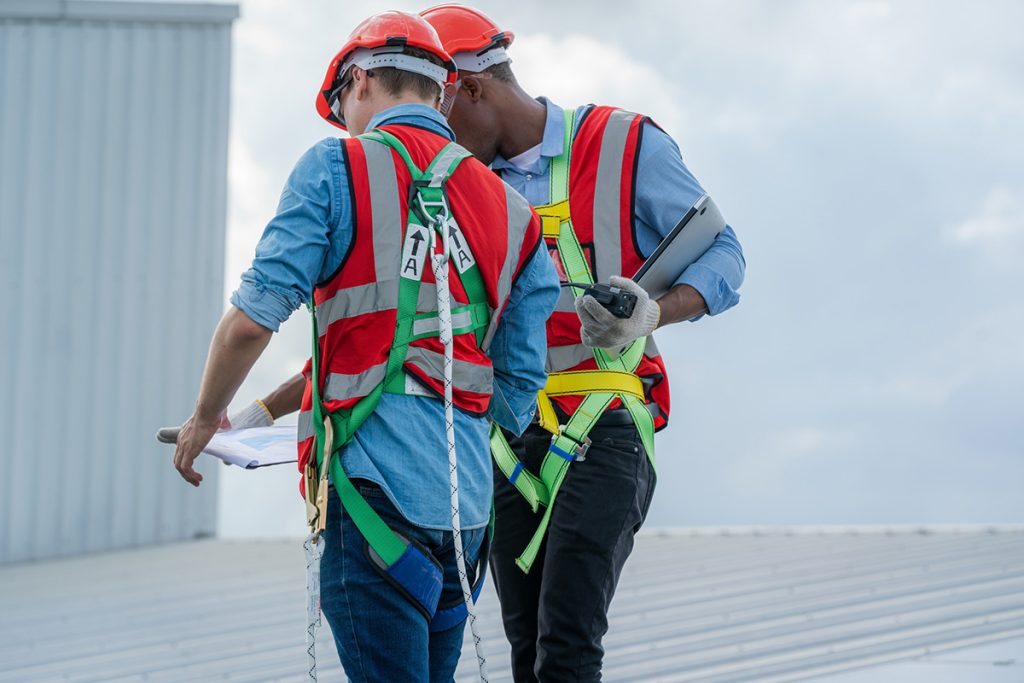
When the adjuster comes out to inspect your commercial roof, you want your own qualified roofing contractor standing right beside them on the ladder. A knowledgeable commercial roofing company can point out subtle damage that a general desk adjuster might easily overlook, like micro-fractured seams, compressed insulation, or compromised flashings. They also speak the same technical language as the insurance adjuster, so the initial scope of loss will be more accurate and comprehensive from day one.
Step 3: File the Claim and Prep for the Joint Inspection
Once you have your initial documentation and your contractor lined up, formally open the claim with your insurance provider. Set up a time for the joint inspection, so your insurance adjuster, your insurance company’s independent engineer (if they bring one), and your commercial roofing contractor can all meet on your roof.
Let your contractor do the heavy lifting here! We’ll review the core damage, present the photographic evidence, and map out the necessary repairs or full replacement scope required to bring your roof back to pre-storm condition (and up to current state, local, and federal building codes).
Step 4: Review the Estimate & Watch for Supplements
A few weeks after the inspection, you’ll receive an estimate or “loss statement” from your insurance carrier. Take a deep breath and don’t panic, it’s normal for the first insurance offer to fall a bit short of the actual cost! Insurance estimates are often initial drafts based on generalized regional software and aren’t always completely accurate.
This is where the magic of contractor coordination comes into play. If the insurance estimate misses critical items like specific code-mandated insulation upgrades, specialized membrane components, or hidden deck damage discovered during teardown, we can file a supplement request directly with the carrier. Think of this supplement as an updated invoice with any missing pieces filled in.
Step 5: The Insurance Brawl (As Needed)
Let’s be realistic: even with the best documentation and an expert contractor standing right next to you, insurance carriers won’t always roll out the red carpet. It doesn’t happen all the time, but sometimes the “final” insurance offer comes back drastically lower than the actual cost of repairs, or worse—a partial or full denial. If an insurance carrier tries to minimize your payout or drag their feet, we don’t have to just accept it. Fighting back comes down to leveraging the right tools:
- Get a Detailed Line-Item Breakdown
If the initial settlement offer falls short, we can ask your carrier for a detailed, line-item copy of their estimate. Compared directly against our scope of work, we can pinpoint exactly where they missed critical items like code-mandated upgrades or hidden structural damage. - Leverage the Appraisal Clause
If you and your insurance company agree that the damage is covered by your policy, but you’re completely deadlocked on how much it costs to fix it, most commercial policies include an appraisal clause. This is an alternative dispute resolution method where both parties hire an independent, qualified appraiser to evaluate the loss. If the two appraisers disagree, a neutral third-party “umpire” steps in, and an agreement by any two of the three sets a legally binding payout. - Bring In a Public Adjuster When Necessary
If the claim involves complex coverage disputes, widespread structural problems, or a stubborn carrier refusing to negotiate in good faith, hiring a state-licensed public adjuster can level the playing field. Unlike insurance company adjusters or contractors looking to secure a building project, a public adjuster works exclusively for you to audit your policy, maximize your claim, and manage the negotiation process from start to finish.
Step 6: Execute the Repairs & Close Out the Claim
Once the final claim amount is approved and settled, your contractor can schedule the repair work! At Waukegan Roofing, we never just patch things up and hand you a bill. Our experienced team of roofing professionals will guide you through the paperwork, provide all necessary warranty documentation, and make sure you have everything needed to satisfy your insurance carrier and release any withheld funds.
You Don’t Have to Fight the Paper Chase Alone
Filing an insurance claim shouldn’t feel like a second full-time job. For more than 100 years, Waukegan Roofing has stood beside commercial, industrial, and institutional property owners across Northern Illinois as a trusted partner through every phase of storm recovery, from initial cleanup to finalizing your commercial insurance claim. We have the experience to talk with the insurance adjusters, walk you through the process, and get your facility back up and running like it was before the storm.
Got storm damage questions, or need an experienced team on your side for an upcoming adjuster meeting? Contact Waukegan Roofing, and let’s get on your roof today!